

Melatonin: why it is more than a sleep hormone
.jpg)

The essentials on melatonin
Melatonin regulates more than 500 genes. From 40, your production declines.
- Far more than sleep: antioxidant, blood pressure, immune function, DNA repair
- 71% of supplements deviate from the labelled content
- In Germany, prescription-only from 2 mg
More than sleep: what melatonin regulates
Melatonin acts as one of the most potent antioxidants the body makes itself, lowers night-time blood pressure and influences fertility and immune function. Its role as a sleep aid is only a small part.
Why does almost no one know this? Because the sleep studies became popular and everything else disappeared into specialist journals. If you dig deeper, a completely different picture emerges.
Melatonin is produced in the pineal gland and steers the circadian rhythm. But the largest melatonin pool sits in the gut, where it is synthesised from tryptophan via serotonin. From there it activates hundreds of genes at once. Antioxidant defence, inflammatory control, DNA repair and dozens of other processes run in parallel. Every night.
The research now supports this well. A meta-analysis of 12 randomised controlled trials showed: melatonin supplementation increased total antioxidant capacity significantly and, at the same time, lowered markers of cell damage from oxidative stress (Ghorbaninejad et al., 2020 [4]). That is genuinely striking: a hormone marketed as a sleep aid is associated with measurable protection of cells against oxidative damage.
For the cardiovascular system it gets more concrete: prolonged-release melatonin (2 to 3 mg/day) lowered night-time systolic blood pressure by about 6 mmHg. For comparison: that matches the effect of a dietary change or regular endurance exercise (Tobeiha et al., 2022 [10]).
Melatonin also appears in oncology: a meta-analysis found that melatonin as an add-on during chemoradiotherapy improved remission rates and reduced overall mortality by 27% (Talib et al., 2021 [11]). Caution is needed here: these are still studies with small cohorts and specific cancer types. The large trials for a clear recommendation are still missing. But the direction is unambiguous: melatonin does far more than make you sleepy.
Whether melatonin helps with sleep has long been settled. The more interesting question: what happens in your body when production drops and you notice nothing?
0.3 mg or 10 mg: the dose question
If melatonin does so much more than help you fall asleep: how much do you need for the other effects to come into play? This is where it gets complicated, because the answer depends on where you live.
In Germany, melatonin products up to 1 mg are available as food supplements in drugstores and pharmacies. Higher doses (from 2 mg) count as prescription-only medicines; the best-known is Circadin 2 mg prolonged-release. In Austria and Switzerland, melatonin is prescription-only in principle. That classification matters, because international research often studies doses that are not freely available in the DACH region.
A 2024 dose-response meta-analysis (23 RCTs, more than 2,000 participants) found: 2 to 4 mg, 1 to 3 hours before bedtime, optimised the sleep-promoting effect (Cruz-Sanabria et al., 2024 [5]). In Germany that dose falls into the prescription-only range.
The controversy: what am I trying to achieve?
For sleep support alone, low doses are often enough. An MIT study showed: as little as 300 micrograms (0.3 mg) improved sleep quality in people over 50, without next-day grogginess (Brzezinski et al., 2005 [1]). Higher doses in the same study even led to a low mood. To put that in perspective: the effective dose was around a factor of 10 below what most supplements offer.
At higher doses (3 to 20 mg) the focus shifts: antioxidant and gene-regulatory effects sit in the foreground, not primarily sleep. The safety literature shows that melatonin up to 20 mg per day over several months causes only mild side effects such as occasional tiredness (Menczel Schrire et al., 2022 [3]). In Germany, however, these doses require a prescription.
What unsettles many people: does melatonin suppress the body’s own production? Here the data are fairly clear. No human study has shown that. A prospective study with 6 months of prolonged-release melatonin (2 mg) found no change in endogenous synthesis. Even 50 mg daily for 37 days did not change the amplitude of natural production (Matsumoto et al., 1997 [8]).
Then there is the heart-failure headline. An observational study from 2025 linked melatonin to an 89% higher heart-failure risk (Nnadi et al., 2025 [13]). The method has a large hole, though: the study only captured documented prescriptions. In the US, where melatonin is sold over the counter, millions take it without a prescription. Those OTC users landed in the control group as “non-users”. On top of that: anyone prescribed melatonin usually has severe insomnia, which itself is a risk factor for heart failure. RCTs in patients with heart failure showed the opposite: melatonin up to 20 mg/day over 24 weeks without adverse effects, with signals of a cardioprotective effect (Tobeiha et al., 2022 [10]).
{{callout}}
Wrongly dosed: the supplement problem
You now know the effects. You know the dose debate. But all of that is irrelevant if what is in your capsule is not what it says on the label.
An analysis of 31 North American products found deviations from minus 83% to plus 478% of the declared content (Erland & Saxena, 2017 [6]). Imagine that with a blood-pressure medicine: you take 5 mg, but get something between 1 and 24. In 26% of the products, serotonin was also detected — a controlled substance that was on none of the labels.
The problem is not limited to North America. A 2025 analysis of EU supplements found: 24% of products from legal distribution channels contained less than 80% of the declared melatonin content. Individual products exceeded the legal maximum by a factor of three (Vanhee et al., 2025 [14]). For online products from dubious sources, the actual content averaged 7.3 mg per dose; far less was declared.
EU supplement law is stricter than the US DSHEA. Even so, the analysis shows: label accuracy is not a given in Europe either, especially with online purchases.
Why supplementing on suspicion is a problem goes beyond melatonin. But it is especially clear here: you know neither whether you need the supplement, nor whether it contains what the label says.
What to watch for in the DACH region: products from a pharmacy rather than the online grey market. GMP-certified manufacturers. And at doses above 1 mg: a conversation with your doctor, because from 2 mg melatonin is a prescription-only medicine in Germany.
Anyone who takes melatonin should know why, at which dose, and from which source.
{{zitat}}
{{cta}}
Your plan: understand, then act
A hormone that steers hundreds of genes. Production that drops from 40. A supplement market with quality problems that reach into the EU. And a dosing debate that cannot be answered in one sentence.
The first step is not a particular dose, but an understanding of what is happening in your body. Decide on data instead of supplementing on suspicion. That applies to melatonin just as it does to vitamin D, iron or thyroid values.
aescolab offers a venous blood analysis with up to 80 biomarkers, designed for women. In the report you do not only see whether your values sit in the reference range, but where they stand against optimal ranges: with a concrete plan and an individual reading. Melatonin is not part of that panel. The levers you can actually measure and target, though, are.
More of what works. Less of what happens on suspicion.
Do not guess. Measure: find your levers.
Frequently asked questions about melatonin
Is melatonin more than a sleep aid?
Yes. Melatonin steers hundreds of genes and acts as one of the strongest antioxidants the body makes itself. Alongside sleep regulation it influences blood pressure, fertility, immune function and DNA repair. Helping you fall asleep is only a small part of the picture.
Does melatonin cause dependence or suppress the body’s own production?
No. No human study has shown that melatonin supplementation suppresses endogenous production or causes tolerance. Even 50 mg daily for 37 days did not change the natural melatonin amplitude (Matsumoto et al., 1997 [8]). Melatonin is not addictive.
How much melatonin should I take?
In Germany, up to 1 mg is available over the counter as a food supplement. As little as 0.3 mg can help with mild difficulty falling asleep from age 50. International research points to 2 to 4 mg as the optimal sleep dose (Cruz-Sanabria et al., 2024 [5]), but in Germany that falls into the prescription-only range (from 2 mg). At doses above 1 mg, speak with your doctor.
Why are so many melatonin supplements wrongly dosed?
As food supplements, melatonin products are not held to the same testing standards as medicines. Even in the EU, a 2025 analysis found that 24% of products contained less than 80% of the declared content (Vanhee et al., 2025 [14]). Buy melatonin in a pharmacy, not on the online grey market, and look for GMP-certified manufacturers.
Can you have your melatonin level measured?
Melatonin is not measured on a standard blood panel, because the level depends strongly on time of day and requires saliva samples at defined times. If you want to know where you stand health-wise, an extended blood analysis with markers such as vitamin D, thyroid and inflammation is a better first step than an isolated melatonin measurement.
About the author

Julian Schramm
CPO & Co-Founder
Julian is an experienced entrepreneur and product leader with a strong background in coaching, health innovation, and user-centered service development. Since founding his first company in 2016, he has launched and grown multiple businesses in fields ranging from media and fitness to digital health. As Chief Product Officer and Co-Founder of aescolab, he is responsible for research, coaching methodology, and the continuous development of aescolab’s blood-biomarker-based services. Julian has a passion for turning complex health data into actionable, customer-friendly experiences. He has built and scaled tech-driven solutions across all his companies, combining scientific depth with product intuition to create high-impact services at scale.
Don't guess. Measure.
Don't guess. Measure.
Up to 80 biomarkers
Co-developed with a physician
98% recommendation rate
The levers you can actually measure
10,000+ analyses
Personal health plans
More interesting articles

Ferritin in women: why the normal range is not enough
Lena is a project manager, 34, and she is doing everything right. Training four times a week, meal prep on Sunday, eight hours of sleep. And still: at 3 p.m. she feels as if someone has pulled the plug. At the GP it is: blood count unremarkable, haemoglobin at 13.2 g/dL. All in the green. But her ferritin? It sits at 19 ng/mL. And that is exactly where the problem is.

Your values are all normal
Last week a woman sat in my practice. 38, a pharmacist. She does everything right: exercise, food, sleep. And still she said: I feel as if someone has turned the dimmer down. Not sick enough for a sick note. But nowhere near the person she could be. Her GP ordered a large blood count and said: everything is normal. I hear that at least three times a week.
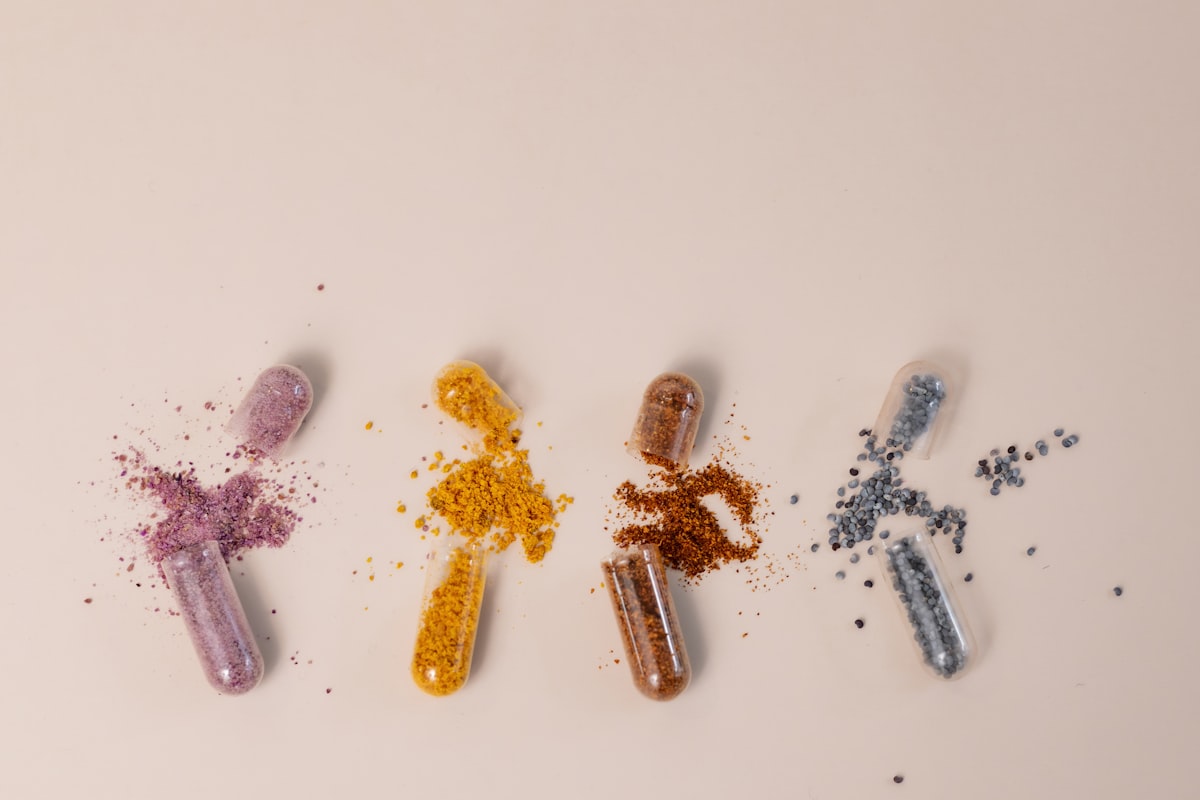
Supplements on suspicion
Five bottles on the kitchen table. Vitamin D, magnesium, zinc, omega-3, iron. For millions of women this is the morning ritual. The question almost never asked: is any of it actually doing something?
The evidence is clear: supplements have an effect when a deficiency is present. Without a prior blood analysis, every capsule is a shot in the dark. Most people still supplement on suspicion - a podcast, Instagram, a friend’s tip. The result: money spent on products the body does not need. And gaps nobody sees, because nobody is looking.
This article shows why blind supplementation is a system problem, what the research says, and how a data-based blood analysis changes the picture.